

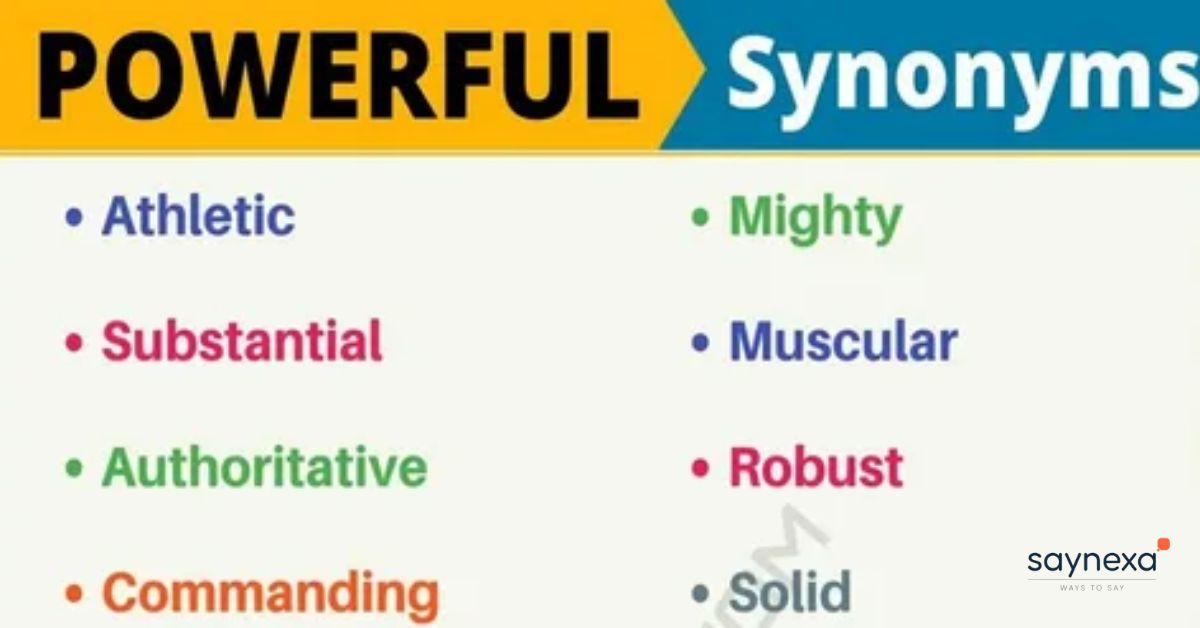
Powerful Synonyms Finding the right word to replace “powerful” can make your writing more engaging, expressive, and precise. Whether you are describing a person, idea, message, tool, or experience, using strong synonyms helps you communicate impact and intensity more effectively. Here are 22 other ways to say “powerful,” along with examples to help you choose the best alternative for different situations.
| Synonym | Meaning | Example |
| Strong | Having great physical or mental power | She is a strong leader who inspires her team. |
| Mighty | Very powerful or impressive | The mighty river flowed through the valley. |
| Influential | Having great influence over people or events | He is an influential figure in the world of technology. |
| Forceful | Showing power and determination | Her forceful speech changed many minds. |
| Potent | Very strong or effective | This medicine is potent and works quickly. |
| Dominant | Most important or powerful | The dominant team won the championship easily. |
| Robust | Healthy, strong, and effective | The company has a robust plan for growth. |
| Vigorous | Strong, healthy, and full of energy | He took a vigorous approach to solve the problem. |
| Formidable | Inspiring fear or respect through power | She is a formidable opponent in the debate. |
| Commanding | Having authority and respect | His commanding presence made everyone listen. |
| Compelling | Strong and convincing | She made a compelling argument in the meeting. |
| Authoritative | Showing confidence and control | He spoke in an authoritative tone during the lecture. |
| Dominating | Having control over others | The dominating player led his team to victory. |
| Resilient | Able to recover quickly from problems | She is resilient and handles challenges well. |
| Unstoppable | Cannot be stopped | The unstoppable team kept winning match after match. |
| Overpowering | Very strong, making others weak | The overpowering smell filled the room immediately. |
| Almighty | All-powerful | They prayed to an almighty being for help. |
| Persuasive | Able to convince others | Her persuasive words convinced the committee. |
| Stalwart | Loyal, reliable, and strong | He is a stalwart friend who always helps. |
| Exceptional | Unusually good or impressive | She showed exceptional talent in her art. |
| Dynamic | Full of energy, strength, and progress | He is a dynamic speaker who motivates people. |
| Impactful | Having a strong effect or influence | Her impactful message inspired thousands of people. |
You can also read: 15 Other Ways to Say INCLUSIVE | Synonyms for Inclusive (Examples)
22 Different Ways to Say POWERFUL: Another Word for POWERFUL
Strong
The word strong is often used to describe someone or something that has physical, mental, or emotional power. It can also refer to objects, ideas, or feelings that are effective and lasting. Using strong instead of powerful can make your writing more relatable because it is a word people see and understand every day. Strong can describe leaders, athletes, arguments, emotions, or even machines. It shows capability, energy, and resilience in different situations.
- She gave a strong performance on stage.
- The strong winds knocked down trees in the city.
- He has a strong sense of justice.
Mighty
The word mighty is often used to describe someone or something that has great strength, power, or importance. It can refer to physical strength, impressive achievements, powerful forces, or things that create a strong impact. Using mighty instead of powerful can make your writing sound more dramatic and expressive. Mighty can describe leaders, warriors, nature, achievements, or forces that show greatness and strength. It represents power, influence, and impressive ability in different situations.
- The mighty warrior defeated his enemies in battle.
- The mighty waves crashed against the shore.
- She built a mighty reputation through years of dedication.
Influential
The word influential is often used to describe someone or something that has the ability to affect people, ideas, decisions, or events. It can refer to leaders, writers, organizations, or movements that create change and inspire others. Using influential instead of powerful focuses on the impact and effect someone or something has on others. Influential can describe personalities, opinions, achievements, or ideas that shape the way people think and act.
- She is an influential leader who inspires many people.
- The influential book changed the way society views the issue.
- He became an influential voice in the technology industry.
Forceful
The word forceful is often used to describe someone or something that shows strong energy, confidence, or determination. It can refer to actions, opinions, speeches, or personalities that create a powerful effect. Using forceful instead of Powerful Synonyms can make your writing express strength, directness, and strong influence. Forceful can describe leaders, arguments, communication, or movements that leave a lasting impression.
- Her forceful speech motivated the entire team.
- He presented a forceful argument during the discussion.
- The forceful winds damaged several buildings.
Potent
The word potent is often used to describe someone or something that has great strength, effectiveness, or influence. It can refer to medicines, ideas, emotions, actions, or abilities that create a strong impact. Using potent instead of powerful can make your writing sound more precise and emphasize effectiveness. Potent can describe solutions, messages, feelings, or forces that produce noticeable results.
- This medicine is potent and works quickly.
- The movie delivered a potent message about social change.
- She has a potent combination of skills and experience.
Dominant
The word dominant is often used to describe someone or something that has the most control, influence, or importance in a situation. It can refer to people, teams, ideas, or characteristics that stand above others. Using dominant instead of powerful can highlight superiority, leadership, or a strong position. Dominant can describe personalities, performances, trends, or forces that have a major impact.
- The dominant team won the championship easily.
- He has a dominant personality that attracts attention.
- Technology plays a dominant role in modern life.
Robust
The word robust is often used to describe someone or something that is strong, healthy, effective, and able to handle challenges. It can refer to systems, plans, businesses, machines, or even people who show strength and reliability. Using robust instead of Powerful Synonyms can make your writing sound more professional and emphasize durability and effectiveness. Robust can describe ideas, strategies, structures, or qualities that remain strong under pressure.
- The company has a robust plan for future growth.
- She has a robust understanding of the subject.
- The machine has a robust design that lasts for years.
Vigorous
The word vigorous is often used to describe someone or something that is full of energy, strength, and enthusiasm. It can refer to activities, efforts, movements, or people who show great power and determination. Using vigorous instead of Powerful Synonyms can make your writing express energy, effort, and active strength. Vigorous can describe exercise, actions, debates, growth, or approaches that show strong and lively performance.
- He took a vigorous approach to solve the problem.
- She follows a vigorous exercise routine every morning.
- The team made a vigorous effort to win the competition.
Formidable
The word formidable is often used to describe someone or something that is very strong, impressive, or difficult to overcome. It can refer to opponents, challenges, skills, or achievements that create respect and admiration. Using formidable instead of Powerful Synonyms can make your writing highlight strength, ability, and the sense of being a serious force. Formidable can describe people, teams, obstacles, or qualities that stand out because of their power and impact.
- She is a formidable opponent in the debate.
- The team faced a formidable challenge during the competition.
- He is a formidable expert in his field.
Commanding
The word commanding is often used to describe someone or something that shows authority, confidence, and control. It can refer to a person’s presence, voice, position, or performance that attracts attention and respect. Using commanding instead of Powerful Synonyms can make your writing emphasize leadership, confidence, and a strong influence over others. Commanding can describe personalities, speeches, appearances, or roles that show control and importance.
- His commanding presence made everyone listen.
- She delivered a commanding performance on stage.
- He holds a commanding position in the organization.
Compelling
The word compelling is often used to describe something that is very convincing, interesting, or powerful enough to attract attention. It can refer to ideas, stories, arguments, messages, or performances that strongly influence people. Using compelling instead of powerful can make your writing focus on the ability to persuade, engage, or create a lasting impression. Compelling can describe opinions, reasons, evidence, or experiences that have a strong effect on others.
- She made a compelling argument during the meeting.
- The book tells a compelling story that keeps readers interested.
- His speech was compelling and inspired many people.
Authoritative
The word authoritative is often used to describe someone or something that shows confidence, knowledge, and control. It can refer to people, voices, sources, or information that are trusted because of expertise and experience. Using authoritative instead of powerful can make your writing emphasize credibility, leadership, and strong command. Authoritative can describe speakers, opinions, reports, or styles that create respect and trust.
- He spoke in an authoritative tone during the lecture.
- She is an authoritative source on the topic.
- The report provides an authoritative explanation of the issue.
Dominating
The word dominating is often used to describe someone or something that has strong control, influence, or superiority over others. It can refer to people, teams, performances, or situations where one side has a clear advantage. Using dominating instead of powerful can make your writing emphasize control, success, and a strong position. Dominating can describe achievements, personalities, strategies, or forces that stand above the rest.
- The dominating player led his team to victory.
- The team gave a dominating performance in the final match.
- Her dominating personality made her a natural leader.
Resilient
The word resilient is often used to describe someone or something that can recover quickly from difficulties, challenges, or setbacks. It can refer to people, materials, systems, or ideas that remain strong and continue moving forward despite problems. Using resilient instead of powerful can make your writing highlight strength, endurance, and the ability to overcome challenges. Resilient can describe personalities, communities, strategies, or qualities that show lasting strength.
- She is resilient and handles challenges with confidence.
- The resilient team recovered after the difficult loss.
- The plant is resilient and can survive harsh conditions.
Unstoppable
The word unstoppable is often used to describe someone or something that cannot be stopped, defeated, or slowed down. It can refer to people, movements, progress, or forces that continue with great determination and strength. Using unstoppable instead of powerful can make your writing emphasize confidence, persistence, and unstoppable energy. Unstoppable can describe goals, teams, achievements, or individuals who keep moving forward despite challenges.
- The unstoppable team kept winning match after match.
- Her unstoppable determination helped her achieve success.
- The company’s unstoppable growth impressed everyone.
Overpowering
The word overpowering is often used to describe someone or something that is extremely strong and has a powerful effect on others. It can refer to emotions, smells, sounds, forces, or situations that are difficult to ignore or resist. Using overpowering instead of powerful can make your writing emphasize intensity, force, and a strong impact. Overpowering can describe experiences, feelings, influences, or forces that leave a lasting impression.
- The overpowering smell filled the room immediately.
- She felt an overpowering sense of excitement before the event.
- The storm brought overpowering winds across the city.
Almighty

The word almighty is often used to describe someone or something that has unlimited power, strength, or authority. It is commonly used in religious or symbolic contexts to represent supreme power and greatness. Using almighty instead of powerful can make your writing sound more dramatic and emphasize absolute strength or control. Almighty can describe beings, forces, or ideas that represent the highest level of power.
- They prayed to an almighty being for help.
- The story describes an almighty hero with incredible abilities.
- The almighty force controlled the fate of the world.
Persuasive
The word persuasive is often used to describe someone or something that has the ability to convince, influence, or change people’s opinions. It can refer to speeches, arguments, ideas, writing, or communication that creates a strong effect on others. Using persuasive instead of powerful can make your writing focus on the ability to influence through words and reasoning. Persuasive can describe speakers, messages, advertisements, or arguments that successfully convince people.
- Her persuasive words convinced the committee.
- He gave a persuasive speech that inspired the audience.
- The advertisement used persuasive techniques to attract customers.
Stalwart
The word stalwart is often used to describe someone or something that is loyal, dependable, and strong. It can refer to people, supporters, qualities, or organizations that remain firm and committed during difficult times. Using stalwart instead of powerful can make your writing emphasize reliability, courage, and lasting strength. Stalwarts can describe friends, leaders, team members, or supporters who show dedication and strength.
- He is a stalwart friend who always helps.
- She has been a stalwart supporter of the team for many years.
- The organization has many stalwart members who work hard.
Exceptional
The word exceptional is often used to describe someone or something that is unusually good, impressive, or outstanding. It can refer to skills, achievements, qualities, performances, or abilities that are above normal standards. Using exceptional instead of powerful can make your writing emphasize excellence, uniqueness, and remarkable impact. Exceptional can describe people, talents, results, or experiences that stand out from the rest.
- She showed exceptional talent in her art.
- He is an exceptional student with great abilities.
- The team delivered an exceptional performance in the competition.
Final Thoughts
Choosing the right synonym for powerful can make your writing clearer, more expressive, and more impactful. Words like strong, mighty, influential, forceful, potent, dominant, robust, and exceptional each carry a slightly different meaning and can help describe strength, influence, confidence, or effectiveness in unique ways. By selecting the best word for the situation, you can make your sentences more engaging and communicate your ideas with greater precision. Whether you are describing a person, idea, action, or experience, these alternatives can add variety and depth to your writing.

Saynexa Editorial Team is a group of language enthusiasts, writers, and digital content specialists dedicated to helping readers improve their vocabulary and communication skills. With a passion for the English language, the team researches synonyms, word meanings, expressions, and writing tips to create accurate, easy-to-understand content. Every article is carefully reviewed to ensure clarity, relevance, and usefulness for students, professionals, writers, and English learners. Through Saynexa, the editorial team aims to make language learning simple, engaging, and accessible for everyone, helping readers find the right words to express themselves with confidence.