

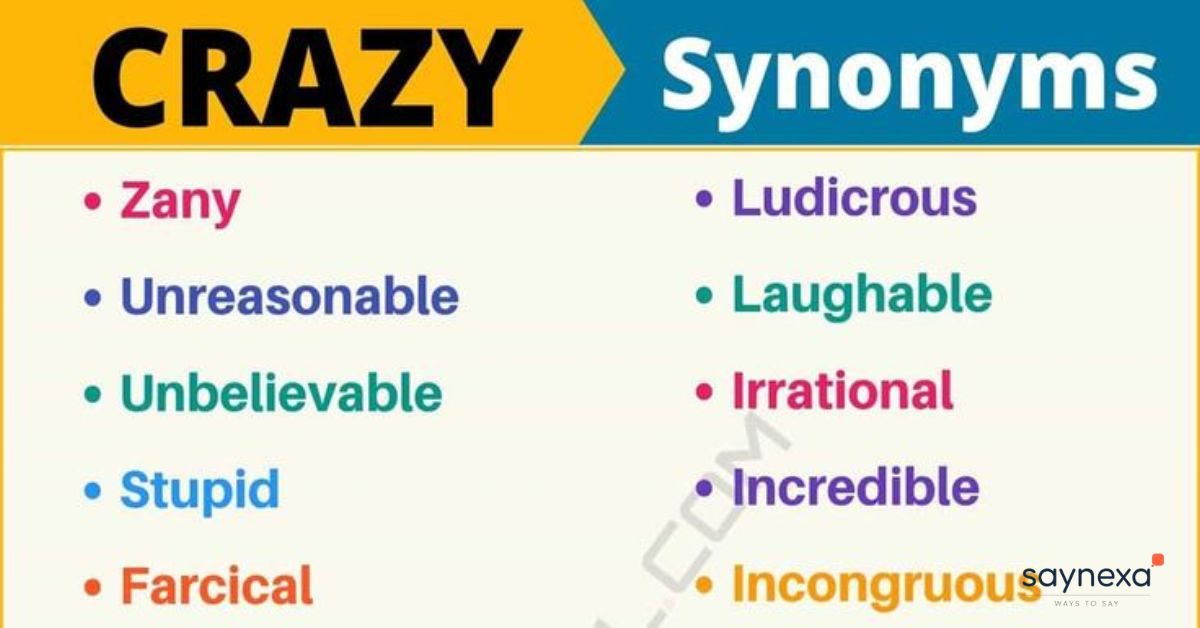
Crazy Synonyms Looking for the right words to describe something unusual, wild, or unbelievable? The word “crazy” is often used in everyday conversations, but there are many other ways to express the same idea with more variety and precision. Whether you mean something exciting, strange, extreme, foolish, or surprising, choosing the right synonym can make your writing and speech more engaging. In this guide, we’ll explore 21 other ways to say “crazy” along with examples to help you use these alternatives naturally in different situations.
You can also read: 17 Other Ways to Say GRATEFUL | Grateful Synonyms (Examples)
21 Different Ways to Say CRAZY: Another Word for Crazy
Insane
Insane is one of the most common synonyms for crazy. It is often used to describe someone, an idea, or a situation that seems extreme, unusual, or difficult to believe. The word can express something shocking, exciting, unreasonable, or completely unexpected. In everyday conversations, people use insane to talk about wild experiences, intense emotions, or unbelievable events. It can be used in both serious and casual situations, making it a flexible word for adding emphasis. Whether you are describing a person’s actions, a surprising idea, or an amazing experience, insaneness helps make your message stronger and more dramatic.
- That idea is completely insane!
- She has an insane love for chocolate.
- The rollercoaster was insane!
- He went insane with joy.
- That was an insane movie plot.
- The party last night was insane.
Mad
Mad is a common synonym for crazy that can have different meanings depending on the situation. It can describe someone who is angry, but it is also used to describe something wild, extreme, or unusual. In casual conversations, people often use mad to talk about impressive actions, intense feelings, or unexpected situations. The word can make a description sound stronger and more emotional. Whether you are describing a person’s behavior, a surprising idea, or an exciting experience, and adds energy and emphasis to your sentence.
- That was a mad idea!
- He was mad with excitement.
- She has a mad passion for music.
- The crowd went mad after the winning goal.
- It was a mad race from start to finish.
- That party was absolutely mad!
Loony
Loony is an informal synonym for crazy that is often used to describe someone who behaves in a strange, silly, or unusual way. It is usually used in a playful or humorous manner rather than a serious one. The word can describe people, ideas, or actions that seem odd, unpredictable, or a little wild. Because loony has a lighthearted tone, it is commonly used in casual conversations when talking about funny behavior or unusual situations. It helps make your description more colorful and expressive.
- That guy has some loony ideas!
- She made a loony decision to travel without a plan.
- His loony sense of humor always makes people laugh.
- The movie had a loony storyline.
- They came up with a loony plan for the weekend.
- That costume looks completely loony!
Nutty
Nutty is an informal synonym for crazy that is often used to describe someone or something that seems strange, unusual, or a little silly. It usually has a playful and friendly meaning rather than a serious one. People often use nutty to talk about funny personalities, unexpected ideas, or behavior that is different from the ordinary. The word can also describe someone who is extremely enthusiastic or obsessed with something. It adds a fun and expressive tone when describing unusual thoughts, actions, or situations.
- He has some nutty ideas about starting a business.
- She is a little nutty but always makes people laugh.
- That was a nutty plan, but it actually worked.
- My uncle has a nutty sense of humor.
- The scientist came up with a nutty invention.
- They went on a nutty adventure last weekend.
Bonkers
Bonkers is an informal synonym for Crazy Synonyms that is used to describe something or someone that is extremely unusual, exciting, or out of control. It is often used in a fun and playful way to talk about surprising situations, strange ideas, or intense reactions. The word can describe anything that seems unbelievable, wild, or completely unexpected. In everyday conversations, bonkers adds energy and emotion to your sentences, making descriptions sound more expressive and entertaining.
- The price of that car is absolutely bonkers!
- She went bonkers when she heard the good news.
- That movie had a bonkers ending.
- His idea for the project is completely bonkers.
- The crowd went bonkers after the final goal.
- The party last night was totally bonkers.
Wacky
Wacky is an informal synonym for Crazy Synonyms that is used to describe something or someone that is unusual, funny, or slightly strange. It usually has a positive and playful meaning, especially when talking about creative ideas, unique personalities, or silly behavior. People often use wacky to describe things that are different from the ordinary but still entertaining or interesting. The word adds a cheerful and humorous feeling to descriptions of unexpected actions, plans, or situations.
- He came up with a wacky idea for the school project.
- She has a wacky sense of humor.
- That was a wacky invention!
- The show is full of wacky characters.
- They made a wacky plan for their vacation.
- His wacky behavior always makes everyone laugh.
Psycho
Psycho is an informal synonym for Crazy Synonyms that is often used to describe someone or something that seems extremely strange, intense, or out of control. It is commonly used in casual speech to talk about wild behavior, shocking actions, or frightening situations. However, the word can be offensive when used to describe a person with a mental health condition, so it is best used carefully. In everyday conversations, psycho is often used in an exaggerated or humorous way to describe someone’s extreme reactions or unusual behavior.
- That movie was a total psycho thriller!
- He went psycho when he lost the game.
- She has a psycho level of energy during workouts.
- That was a psycho idea, but it worked.
- The crowd became psycho after the winning shot.
- His reaction was completely psycho.
Demented
Demented is a strong synonym for Crazy Synonyms that is often used to describe something extremely strange, unreasonable, or disturbing. It can refer to ideas, actions, or situations that seem completely unusual or impossible to understand. In casual conversations, people sometimes use demented in an exaggerated or humorous way to describe wild thoughts or bizarre behavior. However, the word can also be connected with serious medical conditions, so it should be used carefully when describing people. It is best suited for describing unusual ideas, plans, or situations rather than making judgments about someone.
- That is a completely demented idea!
- The movie had a demented storyline.
- He came up with a demented plan for the challenge.
- The villain in the story had a demented mind.
- That joke was dark and demented.
- The game had a demented level of difficulty.
Nuts
Nuts is an informal synonym for Crazy Synonyms that is commonly used in everyday conversations. It can describe someone who behaves in a strange, silly, or unpredictable way, or it can describe an idea or situation that seems unbelievable or extreme. The word is usually playful and not meant to be taken seriously. People often use nuts to express surprise, excitement, or disbelief about something unusual. It can also mean being very enthusiastic or obsessed with something, making it a flexible word for casual speech.
- That idea is completely nuts!
- He is nuts about football.
- She went nuts when she saw the surprise gift.
- The traffic today was absolutely nuts.
- You must be nuts to try that challenge!
- The concert was nuts from beginning to end.
Foolish
Foolish is a synonym for crazy that focuses more on someone making a poor, unreasonable, or silly decision. It is used to describe actions, choices, or ideas that lack good judgment or common sense. Unlike some stronger synonyms, foolish does not usually mean wild or extreme; instead, it suggests that something is unwise or not carefully considered. People often use this word when describing mistakes, risky choices, or behavior that seems unnecessary. It helps explain that something was not sensible or practical.
- It was foolish to ignore the warning signs.
- That was a foolish decision to make.
- He made a foolish mistake during the game.
- She had a foolish idea that caused problems.
- It would be foolish to spend all your money at once.
- His foolish actions surprised everyone.
Wild
Wild is a common synonym for crazy that is used to describe something exciting, unusual, extreme, or difficult to believe. It often refers to experiences, events, ideas, or behavior that are energetic and outside the ordinary. In casual conversations, people use wild to talk about surprising moments, adventurous activities, or situations that feel out of control. The word can have a positive meaning when describing something fun and exciting, but it can also describe something chaotic or unpredictable. It adds a sense of energy and emotion to descriptions.
- That was a wild adventure!
- She had a wild idea for the project.
- The party last night was wild.
- He told us a wild story about his trip.
- The weather has been wild this week.
- That was a wild decision to make.
Eccentric
Eccentric is a synonym for crazy that is often used to describe someone or something that is unusual, unique, or different from what is considered normal. It usually has a more positive meaning than many other synonyms, suggesting creativity, originality, or a distinctive personality. People use eccentricity to describe unusual habits, strange ideas, or interesting ways of thinking. The word often refers to someone who does things in their own way and does not follow traditional expectations. It adds a sense of individuality and uniqueness to descriptions.
- He is known for his eccentric style of dressing.
- She has an eccentric personality that everyone remembers.
- The artist created an eccentric piece of work.
- His eccentric ideas made the project more interesting.
- The inventor was famous for his eccentric experiments.
- That old house has an eccentric design.
Bizarre
Bizarre is a common synonym for crazy that is used to describe something extremely strange, unusual, or difficult to understand. It often refers to situations, ideas, events, or behavior that seem surprising or far from normal. The word has a strong effect and is commonly used when something feels shocking, confusing, or completely unexpected. Unlike playful words like wacky or nutty, bizarre usually focuses more on how strange or unusual something appears. It helps make descriptions more powerful and expressive.
- That was a bizarre thing to say.
- The movie had a bizarre storyline.
- She came up with a bizarre idea.
- The accident was a bizarre event.
- His behavior became increasingly bizarre.
- The artwork looked completely bizarre.
Loopy
Loopy is an informal synonym for crazy that is used to describe someone or something that seems strange, confused, or a little unusual. It often has a playful and lighthearted meaning rather than a serious one. People use loopy to talk about silly behavior, funny ideas, or someone who is acting in an unpredictable way. The word can also describe a person who feels tired, distracted, or not completely focused. It adds a casual and humorous tone when describing unusual thoughts or actions.
- He came up with a loopy idea for the competition.
- She gets a little loopy when she stays up late.
- That was a loopy plan, but it worked.
- My friend has a loopy sense of humor.
- The story had a loopy and unexpected ending.
- His loopy behavior made everyone laugh.
Madcap
Madcap is an informal synonym for crazy that is used to describe someone or something that is wildly unusual, silly, or full of exciting energy. It often refers to ideas, plans, adventures, or people who behave in a fun and unpredictable way. The word usually has a positive and humorous meaning, suggesting creativity rather than seriousness. People use madcap to describe actions that are bold, chaotic, or completely unexpected. It adds a playful feeling to descriptions of unusual situations and adventurous behavior.
- They came up with a madcap plan to surprise their friends.
- The movie is a madcap comedy full of funny moments.
- His madcap ideas always make people excited.
- She went on a madcap adventure across the country.
- The team created a madcap invention for the contest.
- It was a madcap race filled with surprises.
Crackers
Crackers is an informal synonym for crazy that is commonly used in British English. It is often used to describe someone or something that seems completely wild, silly, or unbelievable. The word usually has a playful or humorous meaning and is used in casual conversations to show surprise or excitement. People use crackers to talk about unusual behavior, extreme situations, or ideas that seem impossible to believe. It adds a fun and expressive tone when describing something out of the ordinary.
- That idea is absolutely crackers!
- He must be a cracker to try something so risky.
- The party was completely crackers last night.
- She has a crackers sense of humor.
- The amount of money they spent is crackers.
- That movie had a crackers storyline.
Deranged
Deranged is a strong synonym for crazy that is used to describe someone or something that seems extremely unusual, disturbed, or lacking normal judgment. It is often associated with behavior, thoughts, or actions that appear irrational or out of control. The word can be used in serious situations, especially when describing disturbing behavior, but it is also sometimes used in an exaggerated way in movies, stories, or casual speech. Because it has a harsh meaning, deranged should be used carefully when describing people.
- The villain had a deranged plan for revenge.
- That was a completely deranged idea.
- The movie featured a deranged character.
- His actions seemed completely deranged.
- The story had a dark and deranged plot.
- She created a deranged invention for the competition.
Unhinged
Unhinged is a strong synonym for crazy that is used to describe someone or something that seems out of control, extreme, or unreasonable. It often refers to behavior, emotions, or actions that appear unstable or unpredictable. The word is commonly used in casual speech, news, and entertainment to describe intense reactions, wild ideas, or shocking situations. While unhinged can add dramatic effect, it can also sound harsh when used to describe a person, so it should be used thoughtfully. It is often best for describing actions, ideas, or situations rather than labeling someone.
- That was an unhinged reaction to a small problem.
- The movie had an unhinged and unpredictable storyline.
- He came up with an unhinged plan for the challenge.
- The character became more unhinged as the story continued.
- Her unhinged behavior surprised everyone.
- The internet was full of unhinged comments about the event.
Freaky
Freaky is an informal synonym for crazy that is used to describe something strange, unusual, or slightly scary. It often refers to situations, experiences, behavior, or events that feel weird, surprising, or difficult to explain. The word can have a playful meaning when talking about something unusual, but it can also describe things that create a feeling of fear or discomfort. People commonly use freaky in casual conversations to talk about unexpected moments, strange coincidences, or bizarre experiences.
- That was a freaky coincidence!
- The movie had a freaky storyline.
- She has a freaky ability to remember small details.
- The abandoned house looked really freaky.
- His behavior was getting a little freaky.
- That dream was completely freaky.
Odd
Odd is a common synonym for crazy that is used to describe something unusual, strange, or different from what is expected. It is a softer and more neutral word compared to stronger synonyms like insane or deranged. People often use odd to describe unusual behavior, ideas, habits, or situations that seem a little out of the ordinary. The word does not always have a negative meaning and can simply suggest that something is unique, interesting, or unexpected. It is a useful word for describing things that stand out from the normal.
- That is an odd way to solve the problem.
- She has an odd sense of humor.
- He made an odd decision yesterday.
- The room had an odd smell.
- That was an odd thing to say.
- His odd behavior caught everyone’s attention.
Silly
Silly is a common synonym for crazy that is used to describe something foolish, playful, or lacking seriousness. It often refers to ideas, actions, jokes, or behavior that seem funny, unreasonable, or a little strange. Unlike stronger words for crazy, silly usually has a gentle and friendly meaning rather than a harsh one. People use it in everyday conversations to describe harmless mistakes, funny moments, or unusual choices. The word adds a lighthearted tone when talking about things that are not serious or logical.
- That was a silly mistake to make.
- She had a silly idea that made everyone laugh.
- He was being silly during the meeting.
- Don’t be silly; that plan will never work.
- The kids made silly faces for the camera.
- It was a silly but fun game.
Final Thoughts
Finding the right synonym for crazy can help you express your ideas more clearly and make your communication more interesting. While words like insane, wild, bizarre, loony, and eccentric can all describe something unusual, each one carries a slightly different meaning and tone. Some words are playful and funny, while others are stronger or more dramatic. Choosing the right word depends on the situation, the feeling you want to express, and the message you want to share. By using these alternatives, you can make your writing and conversations more varied, accurate, and engaging.

Saynexa Editorial Team is a group of language enthusiasts, writers, and digital content specialists dedicated to helping readers improve their vocabulary and communication skills. With a passion for the English language, the team researches synonyms, word meanings, expressions, and writing tips to create accurate, easy-to-understand content. Every article is carefully reviewed to ensure clarity, relevance, and usefulness for students, professionals, writers, and English learners. Through Saynexa, the editorial team aims to make language learning simple, engaging, and accessible for everyone, helping readers find the right words to express themselves with confidence.