

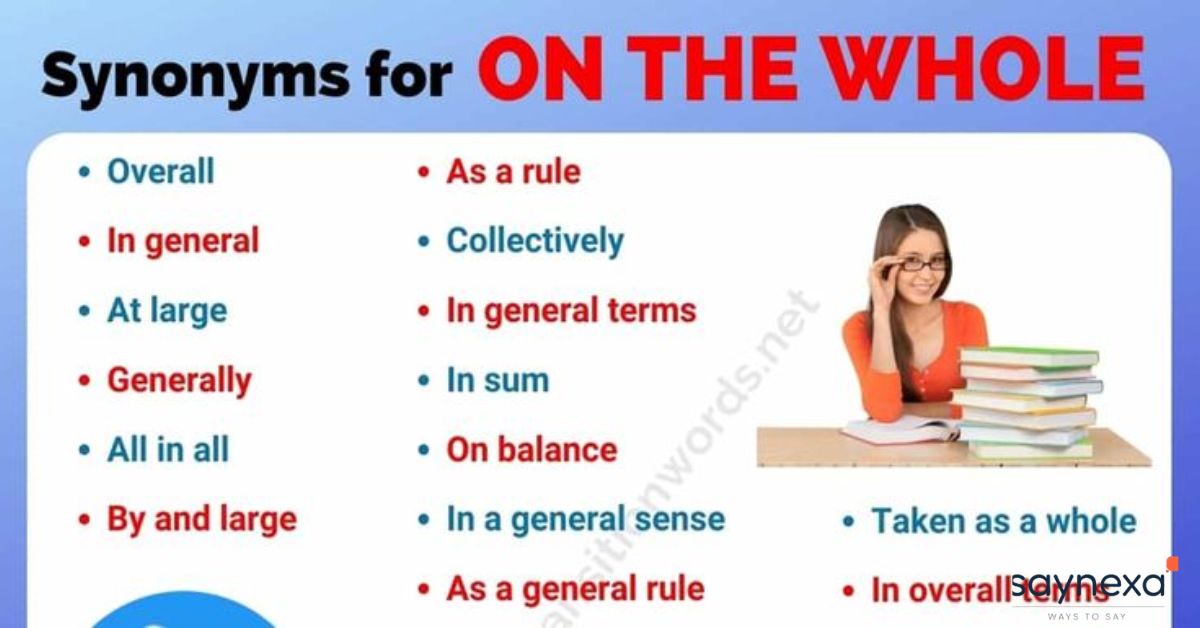
OVERALL Synonyms Finding the right alternative overall can make your writing sound more natural, varied, and engaging. Whether you’re summarizing the main idea, giving a final opinion, or looking at the complete picture, there are many words and phrases that can be replaced overall depending on the context. In this guide, you’ll discover 25 other ways to say “overall,” along with clear explanations and practical examples to help you choose the best synonym for essays, emails, business writing, and everyday conversations.
| Synonym | Meaning | Example |
| Generally | Most of the time, or in most cases | Generally, people like sunny weather. |
| In general | Speaking about most situations | In general, students enjoy holiday breaks. |
| All in all | Considering everything | All in all, the trip was a success. |
| On the whole | Looking at everything together | On the whole, the plan worked well. |
| Broadly | Considering the main ideas or overall picture | Broadly, the project was successful. |
| By and large | Considering most aspects | By and large, the event went smoothly. |
| Altogether | When everything is included | Altogether, we raised a lot of money. |
| As a whole | Considering all parts together | As a whole, the team performed well. |
| In summary | Giving a short conclusion | In summary, the results were positive. |
| Collectively | Together, as a group | Collectively, the students improved their scores. |
| In essence | Expressing the main point | In essence, the story teaches kindness. |
| On balance | After considering both advantages and disadvantages | On balance, the idea is worth trying. |
| Taking everything into account | Considering all the details | Taking everything into account, the plan is safe. |
| Generally speaking | Speaking about most cases | Generally speaking, dogs are friendly animals. |
| In total | Counting everything together | In total, there were fifty participants. |
| Altogether now | When combining or considering everything | Altogether now, we can see the full picture. |
| All things considered | Thinking about every factor | All things considered, it was a good decision. |
| Overall speaking | When talking generally about something | Overall speaking, the project went well. |
| Summing up | Giving a brief conclusion | Summing up, the results were positive. |
| In brief | Explaining something in a few words | In brief, the plan worked. |
| On the whole, generally | Looking at everything broadly | On the whole, generally, the students succeeded. |
| In totality | Considering the complete amount or whole | In totality, the event was successful. |
| Overarchingly | Considering everything from a broad perspective | Overarchingly, the program met its goals. |
| From a general point of view | Looking from a broad perspective | From a general point of view, life is good. |
| In a nutshell | Explaining something very briefly | In a nutshell, the idea is helpful. |
You can also read: 22 Other Ways to Say CHANGE | Change Synonyms (Examples)
Generally
Generally means most of the time or in most situations. It is used to describe something that is usually true, even though there may be some exceptions. This synonym is useful in everyday conversations, academic writing, and professional communication when making broad statements. It helps you express common patterns, habits, or observations without suggesting that something is always true. Using generally makes your writing sound natural, balanced, and easy to understand.
- Generally, people enjoy sunny weather.
- Generally, students finish their homework on time.
- Generally, dogs are friendly with children.
In general
In general means when speaking about most situations or people rather than specific cases. It is used to make broad statements that apply in most circumstances without claiming that something is always true. This phrase is common in everyday conversations, essays, reports, and professional writing because it introduces general observations in a clear and balanced way. Using in general helps your writing sound thoughtful and avoids making absolute statements.
- In general, students enjoy holiday breaks.
- In general, healthy habits lead to better well-being.
- In general, people appreciate honest communication.
All in all
All in all means when everything has been considered or taking all the facts into account. It is commonly used to give a final opinion or summarize a situation after looking at both the positive and negative aspects. This phrase is useful in conversations, reviews, essays, and reports when you want to conclude with an overall judgment. Using all in all makes your conclusion sound natural and well-rounded.
- All in all, the trip was a success.
- All in all, the meeting was productive.
- All in all, we had a wonderful experience.
On the whole
On the whole means considering everything together or looking at the complete situation. It is used to give an overall opinion after thinking about all the important details. This phrase is common in formal and informal writing, especially in reviews, reports, and discussions where you want to present a balanced conclusion. Using it on the whole helps show that your opinion is based on the complete picture rather than just one part.
- On the whole, the plan worked well.
- On the whole, the conference was informative.
- On the whole, the team performed better than expected.
Broadly
Broadly means in a general way or when considering the main ideas rather than specific details. It is used to describe something from a wide perspective without focusing on every individual point. This word is common in academic, business, and professional writing when summarizing trends, results, or opinions. Using broadly helps present the overall picture while keeping the explanation concise.
- Broadly, the project was successful.
- Broadly, the new policy has received positive feedback.
- Broadly, the survey results matched our expectations.
By and large
By and large means considering most aspects or for the most part. It is used to express that something is generally true, even if there are a few exceptions. This phrase is common in both spoken and written English when giving an overall opinion or describing a general outcome. Using by and large helps you make balanced statements without suggesting that every single case is the same.
- By and large, the event went smoothly.
- By and large, customers were satisfied with the service.
- By and large, the team achieved its goals.
Altogether
Altogether means when everything is considered or completely and in total. It is often used to summarize a situation, combine all parts into one whole, or express the total amount of something. This word fits well in both everyday conversations and formal writing when giving an overall conclusion or describing the complete result. Using it altogether makes your writing clear and concise.
- Altogether, we raised a lot of money.
- Altogether, the project was a great success.
- Altogether, there were more than one hundred guests at the event.
As a whole
As a whole means considering all parts together rather than focusing on individual details. It is used when talking about the complete group, system, organization, or situation instead of one specific part. This phrase is common in academic, business, and everyday writing when giving an overall evaluation or opinion. Using as a whole helps emphasize the complete picture.
- As a whole, the team performed well.
- As a whole, the community supported the new project.
- As a whole, the report provides useful information.
In summary
In summary, it means to give a brief conclusion or to present the main points in a few words. It is commonly used at the end of essays, reports, presentations, and discussions to summarize the key ideas. This phrase helps organize your writing and clearly signals that you are wrapping up the main information. Using in summary makes your conclusions easy to follow and professional.
- In summary, the results were positive.
- In summary, the research supports the original theory.
- In summary, the meeting achieved its main objectives.
Collectively
Collectively means together as a group or when considering all members or parts as one. It is used to describe actions, achievements, or characteristics that belong to an entire group rather than to individuals. This word is common in academic, business, and formal writing when discussing teamwork, shared efforts, or combined results. Using collectively emphasizes unity and the overall contribution of everyone involved.
- Collectively, the students improved their scores.
- Collectively, the volunteers raised thousands of dollars.
- Collectively, the employees completed the project ahead of schedule.
In essence
In essence means in its most important or basic form. It is used to express the main idea or core meaning of something without including unnecessary details. This phrase is common in essays, presentations, business writing, and everyday conversations when you want to simplify a complex topic or highlight the key point. Using in essence helps make your message clear and concise.
- In essence, the story teaches kindness.
- In essence, the proposal aims to improve customer service.
- In essence, success comes from consistent effort.
On balance
On balance means after considering both the positive and negative aspects of a situation. It is used to give a fair overall judgment by weighing all the important factors. This phrase is common in reviews, reports, essays, and formal discussions where a balanced conclusion is needed. Using on balance shows that your opinion is based on careful consideration rather than a single detail.
- On balance, the idea is worth trying.
- On balance, the investment was a good decision.
- On balance, the new policy has been beneficial.
Taking everything into account
Taking everything into account means considering all the facts, details, and circumstances before reaching a conclusion. It is used when you want to show that your opinion is based on a careful evaluation of every important factor. This phrase is common in formal writing, business communication, reviews, and discussions where a thoughtful and balanced judgment is needed. Using taking everything into account emphasizes that nothing significant has been overlooked.
- Taking everything into account, the plan is safe.
- Taking everything into account, the project was a success.
- Taking everything into account, it was the best decision available.
Generally speaking
Generally speaking means when talking about most cases or situations rather than specific exceptions. It is used to introduce a broad statement that is usually true without suggesting it applies to every single case. This phrase is common in conversations, essays, presentations, and professional writing when discussing general observations or trends. Generally speaking, your statements sound balanced and accurate.
- Generally speaking, dogs are friendly animals.
- Generally speaking, regular exercise improves overall health.
- Generally speaking, people learn better through practice.
In total
In total means when everything is added together or the complete amount. It is used to show the final number, quantity, or sum after combining all the parts. This phrase is common in everyday conversations, reports, business writing, and academic work when presenting totals or final figures. Using in total makes your writing clear and precise when referring to the complete amount.
- In total, there were fifty participants.
- In total, the company sold 2,000 products last month.
- In total, we spent five hours on the project.
Altogether now
Altogether now is an expression used to invite everyone to do or say something at the same time. It is commonly heard in classrooms, songs, performances, and group activities where a speaker encourages everyone to join in together. Unlike overall, this phrase is not a true synonym for “overall” and should not be used to summarize or give a final conclusion.
- Altogether now, let’s sing the chorus.
- Altogether now, everyone says “thank you.”
- Altogether now, clap your hands on the count of three.
All things considered
All things considered means after thinking about every important fact or circumstance. It is used to give a final opinion after weighing both the positive and negative aspects of a situation. This phrase is common in reviews, essays, reports, and everyday conversations when expressing a balanced conclusion. Using all things considered shows that your judgment is based on careful consideration of the complete picture.
- All things considered, it was a good decision.
- All things considered, the event was a great success.
- All things considered, we are pleased with the final results.
Overall speaking
Overall speaking is not a standard or natural English expression. Native speakers typically use overall or generally speaking instead. If you want to summarize a situation or give a broad opinion, it is better to say overall rather than overall speaking.
- Overall, the project went well.
- Overall, the team’s performance exceeded expectations.
- Overall, customers were satisfied with the service.
Summing up
Summing up means bringing together the main points to give a brief conclusion. It is used at the end of a discussion, presentation, essay, or report to highlight the key ideas without repeating every detail. This phrase is common in both formal and informal communication when you want to clearly signal that you are concluding. Using summing up helps make your message organized and easy to understand.
- Summing up, the results were positive.
- Summing up, the new strategy achieved its goals.
- Summing up, we recommend moving forward with the plan.
In brief
In brief means in a few words or in a short and concise way. It is used to introduce a summary or present the main idea without going into detailed explanations. This phrase is common in essays, reports, presentations, and professional writing when you want to keep your conclusion clear and to the point. Using in brief helps make your writing concise and easy to follow.
- In brief, the plan worked.
- In brief, the research confirmed the original findings.
- In brief, the meeting ended with a positive outcome.
On the whole, generally
On the whole, generally is not a standard English phrase because it combines two expressions with similar meanings, making it redundant and unnatural. If you want to express an overall opinion, use the whole. If you want to describe what is usually true, use generally. Both are correct on their own, but they should not be used together as a single phrase.
- On the whole, the students succeeded.
- On the whole, the project was a success.
- Generally, people enjoy working in supportive environments.
In totality
In totality means when considering everything as a complete whole. It is used to emphasize the full scope or entirety of a situation, idea, or result. Although it can express a meaning similar to OVERALL Synonyms, it is less common in everyday English and is mainly found in formal, academic, or legal writing. Using in totality highlights that nothing has been left out of the assessment.
- In totality, the event was successful.
- In totality, the report provides a clear picture of the findings.
- In totality, the project achieved its intended goals.
Overarchingly
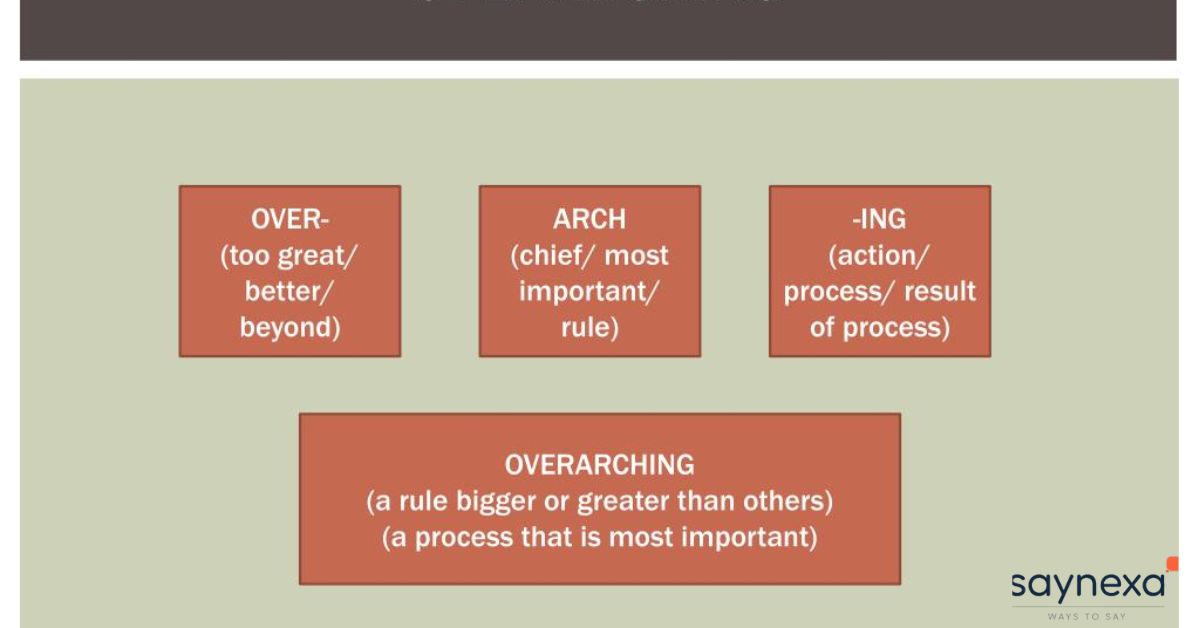
Overarchingly means in a broad or all-encompassing way. It is used to describe something that applies across many areas or covers the main idea as a whole. However, overarchingly is a rare and uncommon word in everyday English. In most situations, words such as OVERALL Synonyms, generally, or broadly sound more natural and are preferred in both speech and writing.
- Overarchingly, the program met its goals.
- Overarchingly, the company’s strategy focused on long-term growth.
- Overarchingly, the research supports the proposed theory.
From a general point of view
From a general point of view means when looking at something from a broad perspective rather than focusing on specific details. It is used to express an OVERALL Synonyms opinion or observation after considering the bigger picture. This phrase is common in academic, business, and formal writing when discussing general trends or broad conclusions. Using from a general point of view helps emphasize the overall perspective instead of individual cases.
- From a general point of view, life is good.
- From a general point of view, the project was successful.
- From a general point of view, the new policy has produced positive results.
In a nutshell
In a nutshell means to explain something in a very brief and simple way. It is used to summarize the main idea without including unnecessary details. This phrase is common in everyday conversations, presentations, articles, and professional writing when giving a quick overview or conclusion. Using in a nutshell makes your message concise, clear, and easy to understand.
- In a nutshell, the idea is helpful.
- In a nutshell, the project was a success.
- In a nutshell, regular practice leads to better results.
Final Thoughts
Using different ways to say overall can make your writing more engaging, natural, and precise. While some synonyms, such as generally, all in all, on the whole, and in summary, are common in everyday English, others work better in formal or academic contexts. Choosing the right alternative depends on whether you are summarizing, giving a final opinion, or describing the big picture. By understanding these 25 synonyms and their proper usage, you can improve your vocabulary, avoid repetition, and communicate your ideas more effectively in any type of writing.

Saynexa Editorial Team is a group of language enthusiasts, writers, and digital content specialists dedicated to helping readers improve their vocabulary and communication skills. With a passion for the English language, the team researches synonyms, word meanings, expressions, and writing tips to create accurate, easy-to-understand content. Every article is carefully reviewed to ensure clarity, relevance, and usefulness for students, professionals, writers, and English learners. Through Saynexa, the editorial team aims to make language learning simple, engaging, and accessible for everyone, helping readers find the right words to express themselves with confidence.